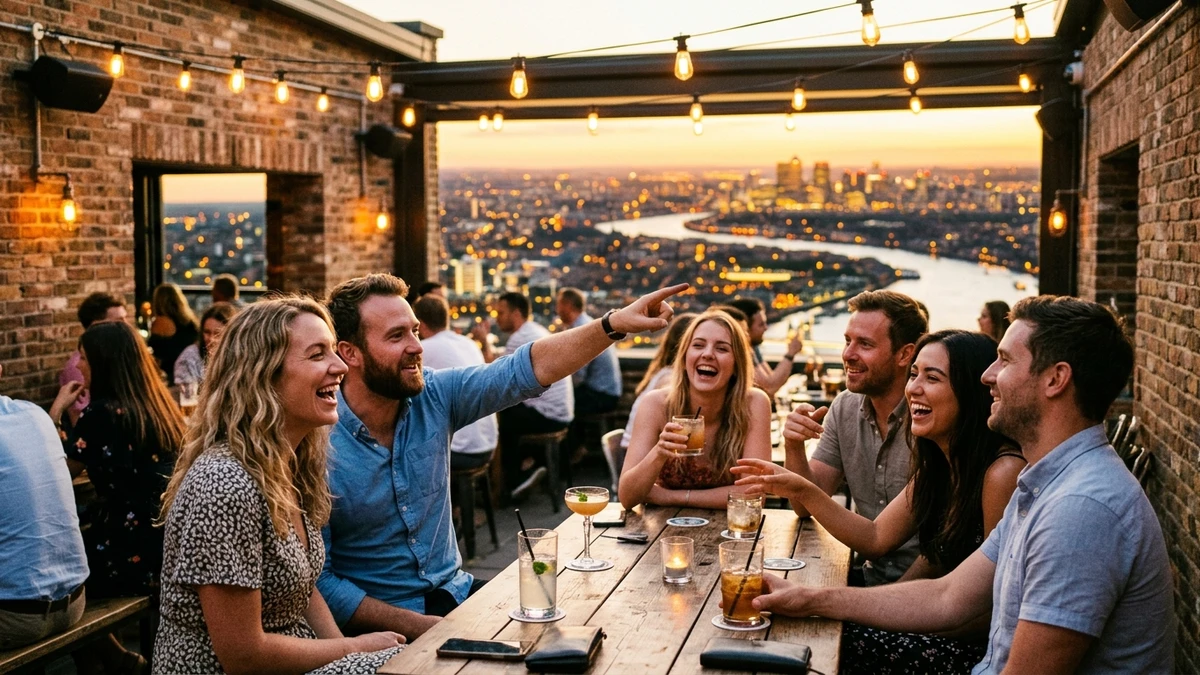
Here are the seven best party destinations to travel to in 2026.
The Destinations Defining 2026's Party Scene
1. Bangkok, Thailand — Rooftops, River Views, and the World's Best-Value Party
Bangkok landed at #7 on TTW's global ranking, and it is hard to think of a city that delivers more nightlife per pound, dollar, or euro spent. Khao San Road remains the backpacker epicentre. It is a 300-metre strip of neon-lit bars, street food carts, and rolling cocktail carts. A Chang beer costs about 80 THB — roughly £1.80. The energy does not dip until sunrise. But the Khao San area has a vertical secret most visitors miss.
Above the street-level chaos, the Phra Nakhon neighbourhood holds one of Southeast Asia's best concentrations of rooftop and riverside bars. The Rambuttri Village rooftops offer scrappy terraces with temple views. Beer runs 80-120 THB. Cocktails are 180-280 THB. There is no dress code. The Gravitique Hotel rooftop on Samsen Road serves Thai craft beers at 180-250 THB with a quieter, more composed atmosphere. For the single best drink in the old town, walk 15 minutes south to Eagle Nest Bar at Sala Arun. The terrace faces Wat Arun directly across the Chao Phraya River. At sunset, the temple's Khmer-style prang shifts from white to gold to amber. Then floodlights light the entire structure against a darkening sky. Cocktails run 350-500 THB and it is, by any measure, one of the world's great bar views.
Bangkok hosted the Maha Songkran World Water Festival in April 2026. The UNESCO-recognized cultural megaevent drew six-figure crowds to Benjakitti Park in its opening days. It cemented the city's status as a party destination that blends tradition with modern spectacle. A night of rooftop drinking near Khao San can cost as little as 300 THB or as much as 2,000 THB; most travellers land somewhere in the middle and leave wondering why they ever paid European club prices.
2. Ibiza, Spain — Fewer Events, Higher Revenue, and a €160 Million Statement
Ibiza sits firmly at #1 on TTW's ranking, and the numbers behind that position tell a fascinating story of structural change in global nightlife. At the International Music Summit (IMS) Ibiza 2026 in late April, MIDiA Research's Mark Mulligan presented the IMS Electronic Music Business Report. The key number: Ibiza clubs earned €160 million in ticket revenue in 2025. That is an increase over the previous year. And it happened despite fewer events — 140 per venue in 2025, down from 144 in 2024.
Club-goers are saving up. They invest in fewer but more extravagant nights. The dancefloor today is focused on exclusivity, artist proximity, and unique experiences, driving demand for premium, large-format events with VIP offerings. The global electronic music market has grown to $15.1 billion. Ibiza remains its trendsetting epicentre. The 2026 beach club season launched in early May. NoHo Ibiza, Zazú Ibiza, Nassau Beach Club, and O Beach Ibiza opened for day-to-night events. These fuse DJ sets with seaside luxury. Superclubs round out the island. Hï Ibiza. Ushuaïa. Pacha. And the new UNVRS venue.
The shift toward premium experiences raises a real question about accessibility. Mulligan warned at IMS about rising costs. Reduced event frequency could limit access for younger audiences. They are the demographic that renews the scene. For travellers who plan ahead, Ibiza in 2026 still offers something no other place can match. World-class electronic music. Mediterranean backdrops. And a cultural legacy stretching back to the birth of Balearic beat.
3. Tokyo, Japan — a Neon Renaissance Built on Strategy
Tokyo ranked #5 globally and is experiencing what can only be described as a tourism super-cycle. Japan welcomed 3.46 million international visitors in February 2026 alone. That is an all-time monthly record. Tokyo absorbs most of that surge. The city's response: treat nightlife as formal urban infrastructure. Shibuya and Shinjuku districts sit at the centre of a coordinated nighttime plan.
Shibuya is the digital pulse of youth culture. The Scramble Crossing moves about 2,500 people every two-minute cycle. Interactive digital ads and contactless logistics surround the square. Beyond the main squares, narrow alleys fill with modern izakayas — small-plate gastropubs where the night typically begins with shared food and conversation before progressing to karaoke or live music venues. Trends in Shibuya shift between seasons; the bar that was packed in March may not exist by September.
Shinjuku is a different beast entirely. It is a multi-layered system. Corporate skyscrapers sit beside Kabukicho, the labyrinthine entertainment zone. The Tokyu Kabukicho Tower opened in 2023. It consolidates accommodation, cinema, theatre, and live performance under one roof. This is part of a city effort to make nightlife safe and transparent for international visitors. Golden Gai remains the city's most authentic after-dark spot. Its miniature bars seat six to eight people each. The experience is intimate and personal. The tourism surge has not changed it. Late-night ramen bars and yakitori stalls in Omoide Yokocho sustain the energy with high-quality, accessible food.
The key to Tokyo nightlife is simple: logistics. Unlike single-neighbourhood party cities, Tokyo distributes its energy across connected nodes. Proximity to a major train line matters more than hotel price, because the last train is a hard deadline you do not want to miss.
4. Berlin, Germany — the Techno Temple That Never Ages
Berlin placed #3 on TTW's list, and its position reflects something rare in global nightlife: staying power without selling out. The city's techno scene remains the world's most influential, anchored by institutions like Berghain — still widely regarded as the planet's most famous and most famously difficult-to-enter club — alongside Watergate, Sisyphos, and Tresor. Berlin's appeal is not luxury. It is authenticity. Industrial clubs, converted factories, and art-inspired venues offer night-long celebrations. The focus stays on music. Not bottle service.
The 2026 summer calendar is filling up. Open-air events. Street festivals. Major club nights are returning. They draw travellers away from crowded hotspots like Barcelona and Amsterdam. Berlin is affordable compared to other Western European party capitals. Covers are reasonable. Drinks are not Ibiza-priced. Public transit runs all weekend. Visitors can stay longer and go out more. The city's Karneval der Kulturen (May 22-25, 2026) and Fête de la Musique (June 21) anchor a summer of street-level celebration that blurs the line between tourism and local life.
Berlin's legendary door policies are part of the mystique. Research the club, dress understated, go in small groups, and do not talk in line. The bouncer's decision is final and famously opaque. Once inside, the night belongs to the music. No phones on the dancefloor at serious venues. No VIP areas sectioning off the energy. The crowd dances until Monday morning without checking the time.
5. Ho Chi Minh City, Vietnam — Southeast Asia's Rising Party Contender
Ho Chi Minh City does not appear on every legacy nightlife ranking. But it is emerging as one of 2026's sharpest value picks for party travel. The city combines rooftop bars with sweeping views of the Saigon River, beachside-inspired clubs, and a street-level energy that rivals Bangkok at half the cost. Expanding air links and better tourism infrastructure make the city easier to reach. Direct flights now connect from major Asian and Middle Eastern hubs.
District 1 anchors the scene with Bui Vien Walking Street. This backpacker strip packs hundreds of bars, food stalls, and live music venues into a few walkable blocks. The rooftop bar circuit includes the Saigon Saigon Bar at the Caravelle Hotel and the Chill Skybar, both offering city-skyline views at prices that feel like a rounding error compared to Western capitals. Craft beer culture has taken hold in Vietnam. Pasteur Street Brewing Company and Heart of Darkness lead the scene. They pair local ingredients like dragon fruit, jasmine, and passionfruit with serious brewing technique.
Daytime exploration balances the night. The War Remnants Museum, Ben Thanh Market, and the Cu Chi Tunnels offer cultural depth between nights out. The food scene spans from street-side phở to rooftop fine dining. You never have to choose between eating well and partying late. Want a Southeast Asian party without Bangkok's crowds or Bali's influencer density? Ho Chi Minh City in 2026 is the answer.
For a data-driven breakdown of how night-time economies are reshaping global tourism, our definitive ranking of the best nightlife cities analyses the 4.9% annual growth in night-time economies and the cities leading that charge.
6. Seoul, South Korea — K-Pop, Karaoke, and 24-Hour Energy
Seoul placed #25 on TTW's global ranking. But its cultural gravity far exceeds that number. Especially for Gen Z and Millennial travellers. South Korea's K-pop tourism boom drove record visitor numbers in early 2026. The country's nightlife districts are a direct beneficiary. Hongdae is the university neighbourhood and ground zero for youth culture. Themed bars. Indie music venues. Clubs that run until sunrise. Gangnam offers a more polished version of the same energy. Sleek cocktail lounges. VIP clubbing.
Karaoke is not an afterthought in Seoul. It is a central pillar of the night. Locals call it noraebang. Groups rent private rooms by the hour. They order food and drinks directly to the room. They cycle through K-pop hits and '80s power ballads in equal measure. The experience is social, affordable, and uniquely Korean. High-tech clubs in Gangnam book international DJs with production values matching any Western superclub. Hongdae's indie scene keeps the underground spirit alive.
Seoul's 24-hour culture means the night never really ends. Late-night Korean BBQ joints stay open past midnight. Convenience stores stock instant ramyeon and soju 24/7. Cafés open at 7am for the post-club coffee run. The city works at any hour. For travellers who want to combine pop culture, food, and clubs into one seamless trip, Seoul delivers with a distinctiveness no Western city can match.
7. Mykonos, Greece — the Sun-Drenched Mediterranean Classic
Mykonos has been on the party radar for decades. But 2026 proves the formula still works. Beach clubs. World-class DJs. Whitewashed luxury. The Cycladic island keeps delivering. Scorpios, Nammos, and Cavo Paradiso anchor a season that runs from May through October, with July and August drawing peak crowds from across Europe and beyond.
What sets Mykonos apart from Ibiza is pace. The island's party culture revolves around the beach club day-to-night rhythm. Arrive at noon. Lounge through the afternoon. Sunset brings DJ sets. After midnight, the energy moves to the town's maze of bars and small clubs. It is a more relaxed rhythm than Ibiza's relentless 11pm-to-6am warehouse energy. It appeals to travellers who want sunshine and sea as much as a dancefloor.
Prices on Mykonos are steep. Beach club daybeds can run hundreds of euros. Drinks are not cheap. But the trade-off is an aesthetic experience few destinations can match. The island's architecture is iconic. Whitewashed cubes. Blue-domed churches. Narrow stone alleys. Every night out becomes something worth photographing. For travellers who want the Mediterranean party experience without Ibiza's intensity, Mykonos remains the gold standard.
What Is Driving the Shift in Global Nightlife?
Three big trends are reshaping where and how people go out in 2026.
First, authenticity is beating luxury. TTW research shows 82% of Gen Z travellers prefer grassroots party environments. They choose culturally rooted celebrations over velvet-rope exclusivity. This explains why cities like Ho Chi Minh City and Seoul are rising — they offer experiences that feel real rather than manufactured for tourists.
Second, governments are treating nightlife as formal economic infrastructure. Tokyo has a nighttime urban strategy. Bangkok has a UNESCO-recognized Maha Songkran festival. Berlin invests in club culture as heritage. These all reflect a new recognition. After-dark economies drive GDP, jobs, and tourism. The old model treated nightlife as something cities tolerate. The new model treats it as something cities design around.
Third, social media is accelerating discovery. A single viral TikTok of a Bangkok rooftop or a Tokyo izakaya can drive thousands of bookings within weeks. This rewards visually distinctive places. Ibiza's beach sunsets. Tokyo's neon canyons. Seoul's themed bars. It penalizes those that look like everywhere else.
At FunSpot, we think AI and human taste work best together. An AI concierge can scan thousands of venues, reviews, and real-time signals. It surfaces options you would never find on your own. But the final choice should always be yours. You know what you are in the mood for better than any algorithm. The best discovery tools put great options in front of you and then get out of the way.
FAQ
What Are the Best Party Destinations to Travel to in 2026?
According to TTW's Top 50 Nightlife Travel Destinations ranking, the top cities are Ibiza (#1), Las Vegas (#2), Berlin (#3), Miami (#4), and Tokyo (#5). Rising destinations include Bangkok (#7), Ho Chi Minh City, and Seoul. The best choice depends on your budget, music taste, and whether you prioritize beach clubs, underground techno, or street-level energy.
How Much Does a Night Out Cost in Bangkok?
A night of rooftop drinking near Khao San Road can cost as little as 300 THB (about £7) for beers on a Rambuttri terrace, or up to 2,000 THB (about £45) for cocktails and dinner at a riverside hotel bar. Beer at street level on Khao San is typically 80-120 THB. Even at the high end, Bangkok is significantly cheaper than European party capitals.
Is Ibiza Still Worth Visiting in 2026?
Yes — but it is more premium than ever. Ibiza's clubs generated €160 million in ticket revenue in 2025 across fewer total events than 2024, reflecting a shift toward high-value, exclusive experiences. The beach club scene is thriving with venues like O Beach, NoHo, and Zazú, and the superclub calendar at Hï Ibiza, Ushuaïa, and Pacha remains world-class. Budget-conscious travellers should book early and consider May or September for lower prices.
Is Tokyo Good for Nightlife?
Tokyo is exceptional — and increasingly strategic about it. Japan welcomed a record 3.46 million visitors in February 2026 alone. Shibuya and Shinjuku offer distinct nightlife ecosystems: Shibuya is youth-driven and fast-changing, while Shinjuku layers everything from Golden Gai's intimate six-seat bars to the Tokyu Kabukicho Tower's consolidated entertainment complex. The key is logistics: stay near a major train line, because the last train is a hard deadline.
What Is Driving the Growth of Nightlife Tourism?
Night-time economies grew 4.9% year-on-year globally, driven by three factors: Gen Z and Millennials prioritizing immersive social experiences over material goods, governments investing in nightlife as formal economic infrastructure, and social media turning after-dark moments into viral travel inspiration. Festival tourism alone is projected to reach $2.13 trillion by 2033, with summer events and competitive socialising venues driving much of the spend.
Key Takeaways
- Night-time economies grew 4.9% globally in 2025, with festival tourism projected to hit $2.13 trillion by 2033, according to TTW.
- Ibiza clubs earned €160 million in ticket revenue in 2025 across fewer events — a structural shift toward premium, high-value nightlife.
- Bangkok offers the best value-for-money party experience, with Khao San Road rooftop beers at 80-120 THB and world-class river views at Eagle Nest Bar.
- Tokyo is experiencing a tourism super-cycle (3.46 million visitors in February 2026) and has built a coordinated nighttime urban strategy around Shibuya and Shinjuku.
- 82% of Gen Z travellers prefer authentic, grassroots party environments over luxury — driving the rise of cities like Ho Chi Minh City and Seoul.
Plan Your Next Night Out
Book a summer trip around Ibiza's beach club openings. Map Tokyo's izakaya-to-club pipeline. Hunt for Bangkok's best rooftop at sunset. The best party destinations to travel to in 2026 reward travellers who research before they land. The nightlife map is bigger, more diverse, and more culturally rich than ever. Getting out there is the whole point.
Looking for your next great night out closer to home? Try the FunSpot AI Concierge. It scans real venues, real reviews, and real-time vibes. Find bars, clubs, and experiences that match what you are in the mood for.